

Your Basement is Under Pressure (Literally)
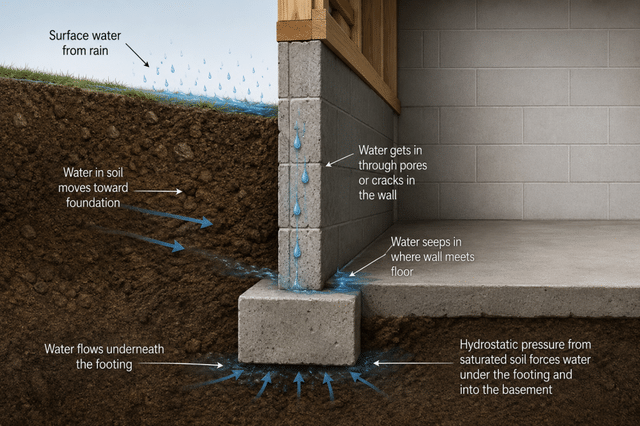
When homeowners think about basement water problems, they usually picture a leaking pipe, a failed sump pump, or water pouring through a crack in the wall (I know I did). But one of the biggest threats to a basement can actually be happening outside your foundation and underneath your home.
This fancy schmancy idea is known as hydrostatic pressure. Ignoring any warning signs can turn a small moisture problem into a MUCH MORE serious basement repair.
What Is Hydrostatic Pressure and What is it Doing in My Basement?
After heavy rain or melting snow, the soil that is surrounding your entire home can become saturated with water. As more water collects in the ground, it creates pressure against your basement walls and underneath the concrete floor.
Water is like a toddler without having any safety locks around. If there’s somewhere it shouldn’t go, it’ll find a way in. If just enough pressure builds around your foundation, it can find its way through wall cracks, joints, porous concrete, or the area where the basement wall meets the floor (Water: 1 Safety locks: 0).
That's why you may suddenly notice basement water after a major Wisconsin rainstorm, even if your basement had previously seemed dry.
The "That's Probably Fine" Warning Signs
Hydrostatic pressure doesn't always begin with a flooded basement. Early signs can be surprisingly easy to overlook:
- Damp spots along basement walls or floors
- White, chalky deposits on concrete
- Musty basement odors
- Cracks in basement walls or floors
- Water appearing where the wall meets the floor
- Increased basement humidity
- Bowing or leaning foundation walls
...Before we start to point fingers, these symptoms shouldn't automatically be assumed to have the same cause, but they are good reasons to investigate what's happening around your foundation.
A "$mall" Water Problem Can Become a "Expen$$$ive" One
The cost of basement problems varies significantly depending on the cause, severity, size of the home, and repair method.
A homeowner dealing with a minor drainage or moisture issue may need a relatively limited repair. But if water intrusion continues or foundation movement develops, the solution can become substantially more involved. And with the price of groceries these days, I think we can all agree there are better places for that extra money to go...
The bigger cost isn't always the water itself, either.
A wet or structurally compromised basement can damage flooring, drywall, insulation, furniture, stored belongings, and even that family heirloom Grandma made very clear is supposed to stay in the family. Continuous moisture will also create the exact conditions where mold and mildew can grow.
If foundation walls begin to bow, crack, or move, structural stabilization may also be necessary.
Don't Wait for Standing Water (Seriously)
One of the biggest misconceptions about basement waterproofing is that you don't have a problem until you see a puddle.
Your basement may give you some red flag warning signs long before that happens.
Pay attention to new cracks, damp areas, musty smells, staining, unusually high humidity, or changes in your basement walls. Catching the source of a problem early may give you more options and help protect the investments (and that family heirloom) you've already made in your home.
At Badger Basement Systems, we help homeowners throughout Wisconsin identify the source of basement water and foundation problems and determine the appropriate solution.
If something in your basement doesn't look, or smell quite right, having it inspected now can be much better than discovering the extent of the problem after the next heavy rain. After all, the only pool you want in your house is one you actually planned for.